How AI-Driven ERP Is Transforming Manufacturing Operations in 2026
Discover how AI-driven ERP systems are transforming manufacturing in 2026 with real-time visibility, workflow automation, AI-generated dashboards, and Agentic AI insights.

Author
Nisha Mane
Published
Feb 26, 2026
Last updated
Mar 1, 2026
Manufacturing ERP systems were originally built as systems of record. Their primary function was to capture transactions such as inventory movement, order creation, invoicing, and accounting entries. Today, manufacturing environments are far more dynamic. Production schedules change frequently, raw material availability fluctuates, customer expectations are higher, and margins are under constant pressure. In 2026, manufacturers are navigating real-time supply chain disruptions, fluctuating demand, stricter quality and compliance requirements, and rising operational costs. ERP systems are no longer expected to simply store historical data.
Manufacturing ERP Is No Longer Just a Back-Office System
Manufacturing ERP systems were originally built as systems of record. Their primary function was to capture transactions such as inventory movement, order creation, invoicing, and accounting entries. This approach worked well in an era when operations were predictable, supply chains were stable, and production cycles changed slowly. ERP systems focused on accuracy and compliance, not speed or intelligence.
Today, manufacturing environments are far more dynamic. Production schedules change frequently, raw material availability fluctuates, customer expectations are higher, and margins are under constant pressure. Static ERP systems struggle in this environment because they were never designed to handle real-time complexity. By the time reports are generated, the situation on the shop floor has already changed.
In 2026, manufacturers are navigating real-time supply chain disruptions, fluctuating demand, stricter quality and compliance requirements, and rising operational costs. ERP systems are no longer expected to simply store historical data. They are expected to support decisions, automate workflows, and provide real-time operational visibility across inventory, production, quality, and dispatch.
According to IDC, global spending on AI in manufacturing is projected to cross USD 14 billion, growing at over 30 percent year-on-year. This growth reflects a clear shift in how manufacturers view ERP platforms. Businesses are investing in AI-driven ERP for manufacturing operations that can actively improve execution, not just generate reports.
Modern manufacturing ERP has moved from being a back-office tool to becoming a core operational platform. The focus is no longer on understanding what happened last month. It is about knowing what is happening now and being able to control what happens next.
What Is an AI-Driven ERP in Manufacturing?
An AI-driven ERP in manufacturing is a modern enterprise resource planning system that uses artificial intelligence to analyse real-time operational data, automate workflows, generate dashboards and reports, and support decision-making across inventory, production, quality, and dispatch. Unlike traditional ERP systems, it actively helps teams act on insights rather than just recording transactions.
What Makes an ERP Truly AI-Driven
Not all ERP platforms that claim AI capabilities actually deliver intelligence Many simply layer analytics dashboards or predictive charts on top of traditional ERP architecture. While this improves reporting, it does not fundamentally change how work is executed.
A truly AI-driven ERP system is built differently. Intelligence is embedded into the core of the platform, not added as an afterthought. The system continuously processes live operational data and presents insights in context, helping teams take timely action without manual analysis.
AI-driven ERP software for factories understands how different processes are connected. It recognises that inventory delays impact production, production issues affect dispatch, and quality failures create downstream risk. This contextual understanding is what allows AI-driven ERP platforms to support decisions, not just display numbers. Key Characteristics of AI-Driven ERP Systems
- Real-time data ingestion across operations Inventory, production, quality, and dispatch data are captured as events occur, not through delayed batch updates.
- Workflow-aware intelligence The system understands where a task sits in the operational flow and responds accordingly.
- AI-generated dashboards and reports Dashboards are created dynamically based on operational needs, without manual configuration.
- Natural language interaction Users can ask questions in simple language and receive clear, actionable insights.
- Decision support, not just data display The system highlights risks, trends, and opportunities automatically.
This is what separates a modern, intelligent ERP system for production planning from traditional ERP software.
Agentic AI and the Shift From Reporting to Action
Agentic AI represents the next evolution of artificial intelligence in enterprise systems. Unlike traditional AI that reacts only to user queries, Agentic AI continuously analyses data and proactively supports decision-making.
In a manufacturing ERP context, Agentic AI works across workflows instead of sitting in a separate analytics layer. It understands operational dependencies and identifies potential issues before they become visible through reports.
For manufacturers, this shift from reporting to action is critical. Instead of reviewing performance after delays occur, teams can respond while work is still in progress.
In practice, Agentic AI in manufacturing ERP enables:
- Identifying production bottlenecks before delays occur
- Highlighting inventory risks based on real-time consumption
- Flagging quality issues early in active workflows
- Recommending corrective actions automatically
Manufacturers using AI-assisted ERP systems report 20–35 percent faster response times to operational issues, leading to improved throughput and reduced downtime.
Why Real-Time Visibility Is the Real Competitive Advantage
Delayed data leads to delayed decisions. When teams rely on end-of-day or weekly reports, they are always reacting to the past. In manufacturing, this lag can quickly translate into missed deliveries, excess inventory, or production stoppages.
A McKinsey study found that manufacturers with real-time visibility across operations improve operational efficiency by up to 25 percent. Real-time visibility allows teams to respond immediately to changes instead of waiting for reports to catch up.
A manufacturing ERP with real-time visibility enables:
- Live inventory tracking to prevent shortages and overstocking
- Production status monitoring to detect delays early
- Quality approvals in motion so issues do not move downstream
- Dispatch readiness tracking to meet delivery commitments
When all teams work from the same live data, coordination improves naturally. Fewer follow-ups are required, fewer meetings are needed to align teams, and decisions are made with confidence.
Workflow Automation Reduces Human Dependency
Manual coordination remains one of the biggest inefficiencies in manufacturing operations. Teams often spend hours following up on approvals, checking status across systems, and updating spreadsheets. This increases the risk of errors and slows down execution.
AI-driven ERP platforms reduce this dependency by automating workflows across departments. Work progresses based on system rules and approvals rather than manual reminders.
Common Workflows Automated by Modern Manufacturing ERP
- Inventory validation and approvals
- Production stage transitions
- Quality checks and sign-offs
- Dispatch readiness confirmations
- Billing triggers linked to actual dispatch
Workflow automation improves consistency, reduces errors, and enforces process discipline at scale.
Security, Compliance, and Governance in AI-Driven ERP
As ERP systems become more intelligent, data security and governance become even more important. AI systems must operate within strict permission boundaries to ensure sensitive operational and financial data is protected.
According to Deloitte, 67 percent of manufacturing leaders rank data governance as a top technology priority. This concern increases when AI systems have access to real-time operational data.
Modern AI-driven ERP platforms embed governance by design through:
- Role-based access control
- Approval hierarchies
- Complete audit trails
- AI-safe permission boundaries
These controls ensure that AI-generated insights remain secure, compliant, and trustworthy across the organisation.
Measurable Business Impact of AI-Driven ERP Systems
The benefits of AI-driven ERP systems are measurable and well documented. Manufacturers that adopt intelligent ERP platforms report tangible improvements across key operational metrics.
Common outcomes include:
- 30 percent reduction in manual reporting effort
- 20 percent improvement in production planning accuracy
- Faster audit readiness and compliance reporting
- Improved on-time delivery rates
These gains directly impact profitability, customer satisfaction, and operational resilience.
Traditional ERP vs AI-Driven ERP
Traditional ERP systems record what happened. AI-driven ERP systems help control what happens next.
Traditional ERP relies on static reports and manual analysis. AI-driven ERP uses real-time data, automation, and Agentic AI to guide execution.
This difference defines the future of manufacturing ERP.
The Future of Manufacturing ERP
ERP systems are evolving from passive systems of record to active systems of execution. AI-driven ERP platforms are becoming central to how manufacturing organisations plan, operate, and grow.
In the coming years, AI-driven manufacturing ERP will no longer be a differentiator. It will be the baseline expectation for competitive manufacturers. Businesses that adopt intelligent ERP early gain faster response capabilities, better operational control, and long-term competitive advantage.
Frequently Asked Questions: AI-Driven ERP in Manufacturing
1. How is AI-driven ERP different from traditional ERP? AI-driven ERP systems use real-time data, automation, and intelligence to support decisions and execution, while traditional ERP systems mainly record historical data.
2. Is AI-driven ERP suitable for small and mid-sized manufacturers? Yes. Modern AI-driven ERP platforms are modular and scalable, allowing manufacturers to start small and expand as operations grow.
3. What role does Agentic AI play in manufacturing ERP? Agentic AI proactively analyses operational data, identifies risks, and suggests actions without waiting for user queries.
4. Can AI-driven ERP improve production planning accuracy? Yes. Manufacturers report up to 20 percent improvement in planning accuracy using AI-driven ERP systems.
5. Is AI-driven ERP secure for enterprise use? Enterprise-grade AI-driven ERP platforms include role-based access, audit trails, approval workflows, and AI-safe permission controls.
Did you find this blog helpful? Share it with others who might benefit!
Loading link...
Why Manufacturing ERP Fails at Execution and How Syncrra Fixes It
Previous Blog PostWhy Traditional Manufacturing ERP Systems Fail at Scale and How Modern Platforms Fix It
Next Blog PostRelated Blogs
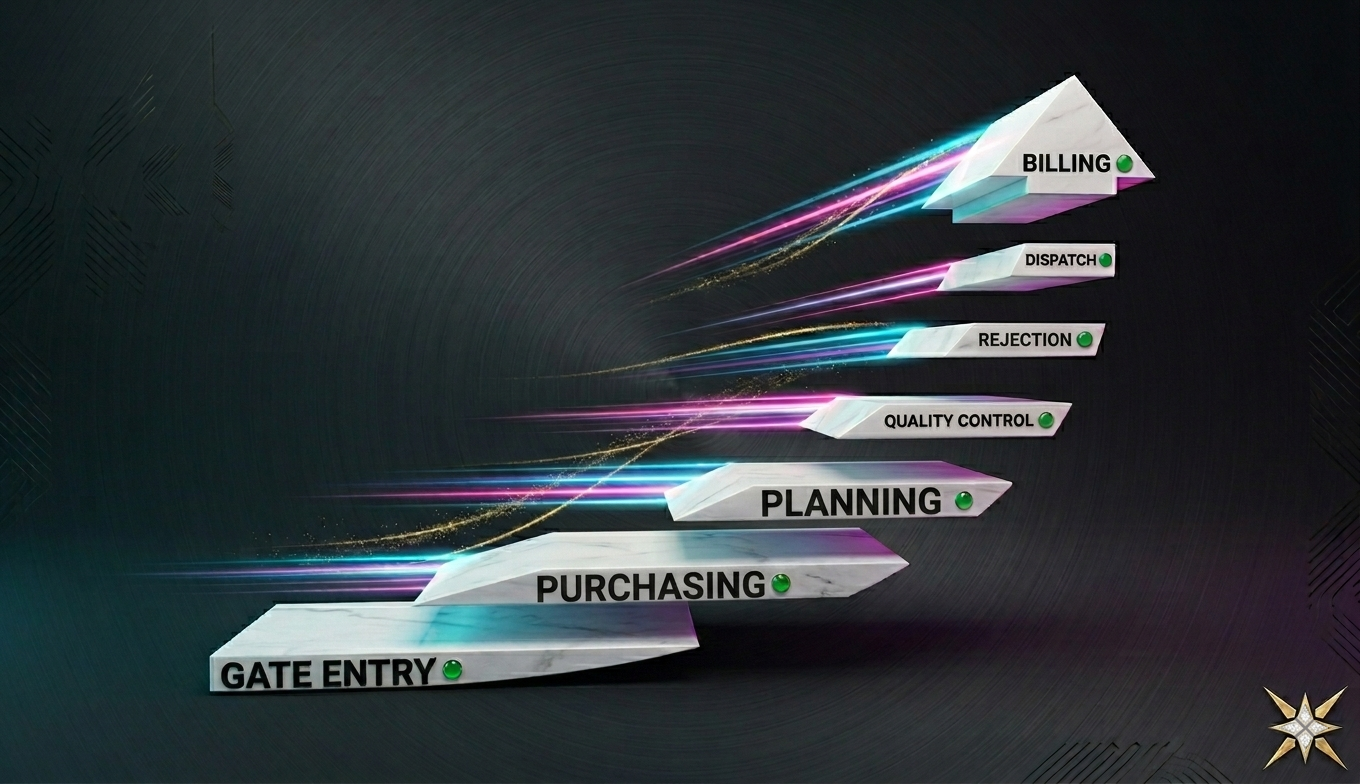
Syncrra ERP: Control Manufacturing From Gate Entry to Billing in Real Time
Discover how Syncrra unifies manufacturing execution from gate entry to billing using real-time workflows, built-in intelligence, and audit-ready traceability.
 By Prachi Bhalerao
Why Manufacturing ERP Fails at Execution and How Syncrra Fixes It
Syncrra redefines manufacturing ERP with workflow-driven execution, real-time visibility, and Agentic AI that helps teams act faster and stay in control.
 By Shekhar Gadekar
Why Traditional Manufacturing ERP Systems Fail at Scale and How Modern Platforms Fix It
Learn why traditional manufacturing ERP systems fail as operations scale and how modern, AI-driven ERP platforms enable growth with real-time visibility and automation.
 By Akash Jivane