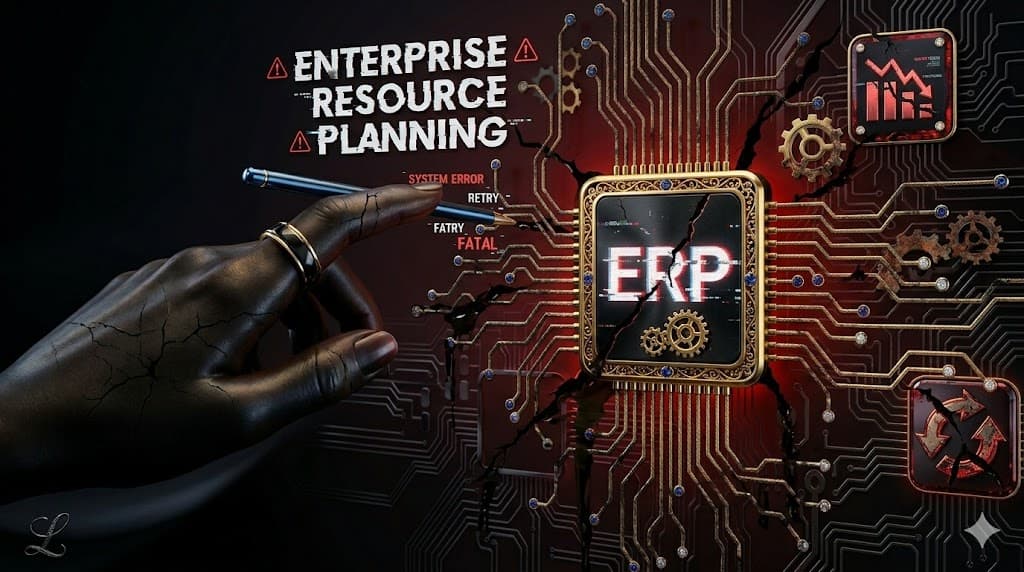
Why Manufacturing ERP Fails at Execution and How Syncrra Fixes It
Syncrra redefines manufacturing ERP with workflow-driven execution, real-time visibility, and Agentic AI that helps teams act faster and stay in control.

Author
Shekhar Gadekar
Published
Feb 13, 2026
Last updated
Feb 16, 2026
Most ERP platforms that claim AI capabilities focus on analytics. They generate dashboards, forecasts, or predictive charts and expect users to interpret and act on them. This still leaves the burden of execution on people.Syncrra takes a different approach through its Agentic AI layer.Agentic AI in Syncrra understands manufacturing context, not just data. It continuously observes execution across inventory, production, quality, dispatch, and billing, identifying patterns, risks, and dependencies in real time.
The Real Problem With Manufacturing ERP Is Not Data. It Is Execution
Manufacturers today are not struggling because they lack data. In fact, most manufacturing organisations are overwhelmed with it. ERP systems track inventory balances, production orders, quality checks, dispatch schedules, and financial transactions in great detail. Reports are generated daily. Dashboards are reviewed regularly. Yet, on the ground, execution issues persist.
Production delays, missed delivery timelines, quality hold-ups, and billing mismatches continue to occur even in organisations with mature ERP systems. This contradiction exists because traditional ERP systems are designed to record outcomes, not to guide execution while work is actively happening.
Manufacturing does not operate in hindsight. It operates in real time. Decisions need to be made while materials are moving, machines are running, and orders are being fulfilled. When systems can only tell teams what happened after the fact, they fail to prevent issues when it matters most.
According to McKinsey, manufacturers lose 20 to 25 percent of productive capacity due to execution inefficiencies such as delayed approvals, lack of coordination, and poor real-time visibility. These losses are not strategic failures. They are execution failures rooted in systems that were never built to support live operations.
This is where traditional manufacturing ERP begins to fall short.
Why Traditional ERP Was Never Designed for Modern Manufacturing Reality
Traditional ERP platforms were built for an era of predictable demand, stable supply chains, and slower operational cycles. Their primary goal was standardisation, ensuring that transactions across finance, inventory, and production were recorded consistently.
These systems are good at answering historical questions like:
- How much inventory do we have on record?
- What was produced last week?
- What invoices were raised this month?
However, they struggle to answer operational questions such as:
- What is stuck right now?
- Which approval is blocking dispatch?
- What will break downstream if this job slips today?
In traditional ERP environments:
- Data entry happens after execution is complete
- Departments work in functional silos
- Execution relies heavily on people noticing issues
- Exceptions are handled manually
As manufacturing operations scale, this model becomes fragile. Teams compensate by creating parallel systems, spreadsheets, trackers, and informal communication channels just to keep work moving.
Gartner reports that over 60 percent of ERP-related challenges in manufacturing occur at the execution layer, not at planning or accounting. Traditional ERP systems were simply not designed to manage interconnected, real-time execution across departments.
Execution Is the Most Fragile Layer in Manufacturing Operations
Execution is where manufacturing performance is truly tested. This is where materials enter facilities, production lines run, quality is verified, and goods are dispatched to customers. Even small disruptions at this stage can cascade into significant delays and cost overruns.
Despite its importance, execution is often the least systemised part of manufacturing. Many organisations still rely on:
- Manual coordination between teams
- Email and phone-based approvals
- Spreadsheet trackers
- Experience-driven decision-making
While experience is valuable, overdependence on individuals creates risk. When execution knowledge lives in people’s heads rather than systems, consistency suffers and scale becomes difficult.
IDC estimates that manufacturers relying heavily on manual execution coordination spend up to 30 percent more time resolving operational issues. This time is taken directly from productive work, leading to higher costs and lower efficiency.
Modern manufacturing requires systems that actively support execution, not just document it.
Syncrra’s Execution-First Approach to Manufacturing ERP
Syncrra is built on a fundamentally different philosophy. Instead of acting as a passive system of record, Syncrra functions as an execution engine that actively moves work forward.
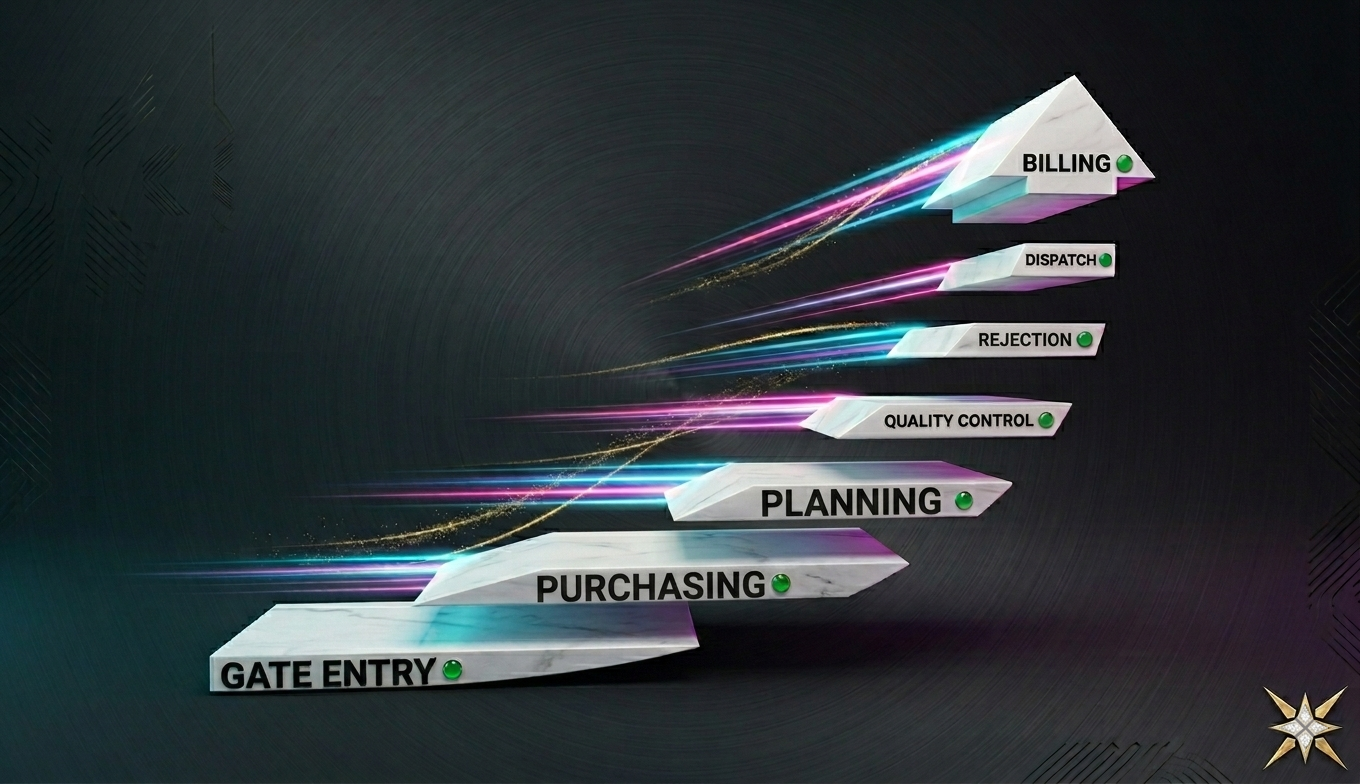
Rather than treating manufacturing stages as isolated modules, Syncrra connects the entire lifecycle into a continuous execution flow.
In Syncrra:
- Gate entry becomes the starting point of execution
- Inventory validation directly impacts production readiness
- Production completion automatically triggers quality workflows
- Quality clearance enables dispatch without manual follow-ups
- Dispatch confirmation flows directly into billing
Each stage is aware of what came before and what must happen next. This removes invisible handover gaps where work typically gets stuck.
Syncrra does not just store data. It enforces momentum across manufacturing operations.
Workflow-Driven Execution That Removes Human Dependency
A major differentiator of Syncrra is its workflow-driven architecture. In traditional ERP systems, workflows are often limited to basic approvals. In Syncrra, workflows define how execution progresses across the organisation.
Workflow-driven execution ensures:
- Clear ownership at every stage
- Automatic progression without reminders
- Fewer missed handovers
- Consistent process discipline
These workflows are configurable, allowing manufacturers to adapt processes as operations evolve without heavy customisation or risk.
According to IDC, manufacturers using workflow-driven ERP platforms see a 30 percent reduction in coordination effort and faster execution cycles across departments. Syncrra delivers these benefits by embedding workflows directly into daily operations.
Real-Time Visibility That Supports Action, Not Just Reporting
Visibility alone does not solve execution problems. Many systems provide dashboards, but those dashboards often reflect outdated information.
Syncrra delivers real-time operational visibility that is directly tied to execution. Teams can see:
- Live gate entry and material movement
- Current inventory availability
- Production progress and delays as they happen
- Quality status and pending approvals
- Dispatch readiness across orders
- Billing triggers linked to execution
Because all teams work from the same live data, decisions become faster and more aligned. There is no need to reconcile reports or wait for updates.
McKinsey research shows that manufacturers with real-time operational visibility improve efficiency by up to 25 percent. Syncrra embeds this visibility into execution instead of treating it as a reporting layer.
Traceability and Compliance Built Into Daily Execution
Traceability is no longer optional in manufacturing. Regulatory requirements, certifications, and customer expectations demand full visibility into how products are made and moved.
Many manufacturers struggle to balance traceability with speed. Data is often collected retroactively, creating additional workload and audit risk.
Syncrra embeds traceability directly into execution. Every material movement, production step, approval, quality check, and dispatch action is recorded automatically as work progresses.
This results in:
- Complete audit trails
- Faster audit readiness
- Reduced compliance risk
- Clear accountability across teams
Deloitte reports that 67 percent of manufacturing leaders prioritise governance and traceability in ERP selection. Syncrra meets these needs without slowing down operations.
How Syncrra’s Agentic AI Layer Changes Manufacturing Execution
Most ERP platforms that claim AI capabilities focus on analytics. They generate dashboards, forecasts, or predictive charts and expect users to interpret and act on them. This still leaves the burden of execution on people.
Syncrra takes a different approach through its Agentic AI layer.
Agentic AI in Syncrra understands manufacturing context, not just data. It continuously observes execution across inventory, production, quality, dispatch, and billing, identifying patterns, risks, and dependencies in real time.
Instead of waiting for users to ask questions, the AI proactively surfaces what needs attention. This may include a production delay, an inventory risk, a pending approval blocking dispatch, or a downstream impact on billing.
This shift matters because manufacturing issues rarely begin as major failures. They start as small signals that are easy to miss in complex operations. Agentic AI helps surface these signals early, when corrective action is still simple and cost-effective.
From AI Dashboards to AI-Guided Execution
Traditional AI-powered ERP systems focus on visualisation. They show data but do not guide action. In fast-paced manufacturing environments, this often leads to delayed or inconsistent responses.
Syncrra’s Agentic AI goes beyond visualisation by guiding execution.
The AI layer works alongside workflows to:
- Highlight execution bottlenecks before they escalate
- Surface inventory or capacity risks in real time
- Identify approvals blocking downstream activity
- Suggest next-best actions based on operational context
This does not replace human decision-making. It supports it by reducing cognitive load and ensuring critical signals are not buried in data.
IDC reports that organisations using AI-assisted operational decision systems experience 20 to 35 percent faster response times. Syncrra brings this advantage directly into manufacturing execution.
AI-Generated Dashboards and Reports That Adapt to Roles
Syncrra’s Agentic AI can dynamically generate dashboards and reports based on role, context, and priority.
Instead of relying on fixed dashboards, teams can:
- View role-specific execution insights
- Generate reports based on live operational questions
- See data in context rather than isolation
This flexibility is critical in manufacturing, where priorities change frequently. Agentic AI allows dashboards to evolve without manual configuration.
Governed, Secure, and Explainable AI by Design
AI adoption in enterprise environments raises valid concerns around governance and control. Syncrra addresses these concerns by embedding Agentic AI within existing permission and approval structures.
The AI layer:
- Respects role-based access controls
- Operates within defined workflows
- Maintains full audit trails
- Does not bypass human approvals
According to Deloitte, over 65 percent of manufacturing leaders prioritise AI systems that are explainable and governance-aware. Syncrra’s AI is designed with these requirements at its core.
From Reporting What Happened to Controlling What Happens Next
Traditional ERP systems explain what happens after execution is complete. Syncrra focuses on influencing execution while it is still unfolding.
By combining real-time data, workflow-driven execution, and Agentic AI, Syncrra enables teams to anticipate issues, respond faster, and maintain operational control.
Most ERP systems tell you what happened. Syncrra helps control what happens next.
Conclusion: Why Execution-First ERP Is the Future of Manufacturing
Manufacturing success today is defined by execution speed, consistency, and control. Systems that merely record transactions are no longer sufficient in complex, fast-moving environments.
Syncrra represents the next generation of manufacturing ERP. By focusing on execution first, connecting operations end to end, embedding traceability, and introducing Agentic AI, Syncrra enables manufacturers to operate with clarity, speed, and confidence.
Execution is no longer a back-office concern. It is the core of manufacturing performance.
Syncrra is built for that future.
FAQs:
1. What makes Syncrra different from traditional manufacturing ERP? Syncrra focuses on execution, not just transaction recording. It connects manufacturing stages into workflow-driven, real-time execution.
2. What is Agentic AI in Syncrra? Agentic AI actively monitors execution, understands context, and surfaces risks, insights, and next actions in real time.
3. Does Agentic AI replace human decisions? No. It supports decision-making by reducing cognitive load and highlighting what needs attention.
4. Can Syncrra manage the full manufacturing lifecycle? Yes. Syncrra supports operations from gate entry to billing within one connected platform.
5. How does Syncrra reduce execution delays? By automating workflows and removing manual handovers between teams.
6. Is Syncrra suitable for multi-plant operations? Yes. Syncrra scales across locations while maintaining central visibility and local control.
7. Does Syncrra support compliance and audits? Yes. Traceability and audit trails are built directly into execution.
8. Can dashboards be customised in Syncrra? Yes. Dashboards and reports adapt dynamically using Agentic AI.
9. How fast can teams start using Syncrra? Syncrra is designed for phased onboarding with quick time to value.
10. Why is execution-first ERP critical for the future? Because manufacturing complexity is increasing and systems must actively orchestrate execution, not just record it.
Did you find this blog helpful? Share it with others who might benefit!
Loading link...
Syncrra ERP: Control Manufacturing From Gate Entry to Billing in Real Time
Previous Blog PostHow AI-Driven ERP Is Transforming Manufacturing Operations in 2026
Next Blog PostRelated Blogs
Syncrra ERP: Control Manufacturing From Gate Entry to Billing in Real Time
Discover how Syncrra unifies manufacturing execution from gate entry to billing using real-time workflows, built-in intelligence, and audit-ready traceability.
 By Prachi Bhalerao
How AI-Driven ERP Is Transforming Manufacturing Operations in 2026
Discover how AI-driven ERP systems are transforming manufacturing in 2026 with real-time visibility, workflow automation, AI-generated dashboards, and Agentic AI insights.
 By Nisha Mane
Why Traditional Manufacturing ERP Systems Fail at Scale and How Modern Platforms Fix It
Learn why traditional manufacturing ERP systems fail as operations scale and how modern, AI-driven ERP platforms enable growth with real-time visibility and automation.
 By Akash Jivane