
Why Traditional Manufacturing ERP Systems Fail at Scale and How Modern Platforms Fix It
Learn why traditional manufacturing ERP systems fail as operations scale and how modern, AI-driven ERP platforms enable growth with real-time visibility and automation.

Author
Akash Jivane
Published
Feb 8, 2026
Last updated
Feb 28, 2026
Agentic AI represents a shift from reactive ERP systems to proactive ones. Instead of waiting for users to request reports, Agentic AI continuously monitors workflows and flags potential issues early. In large manufacturing environments, this proactive support becomes essential. Agentic AI can detect early signs of production delays, inventory shortages, or quality risks and notify teams before problems escalate.
The Scaling Problem in Manufacturing ERP
Most manufacturing ERP systems work reasonably well when operations are small and processes are simple. Early on, teams manage with basic inventory tracking, production planning, and accounting modules. At this stage, ERP systems serve as digital record-keepers and provide a sense of control.
However, as manufacturing operations scale, cracks begin to appear. Volumes increase, product variants grow, suppliers multiply, and compliance requirements become stricter. What once felt manageable starts to feel fragmented. Teams rely heavily on spreadsheets, emails, and manual coordination to bridge gaps that the ERP system cannot handle.
According to a 2024 Gartner report, over 65 percent of mid-sized manufacturers say their ERP systems struggle to support scaling operations without heavy customisation. This highlights a fundamental issue. Traditional ERP platforms were not designed for agility. They were built for stability and standardisation, not continuous change.
By 2026, manufacturers need ERP systems that can scale with complexity, not break under it. The failure of traditional ERP at scale is one of the biggest reasons manufacturers are now shifting toward modern, AI-driven ERP platforms.
What Does “ERP Failing at Scale” Really Mean?
ERP failure at scale does not always mean system downtime or crashes. In most cases, the system continues to function, but it becomes a bottleneck instead of a support system. Teams spend more time managing the ERP than running operations.
As operations grow, manufacturers commonly experience delayed reporting, disconnected workflows, and limited visibility across departments. Decision-making slows down because data is outdated or spread across multiple systems.
At scale, traditional ERP systems often create:
- Delays in production planning updates
- Inventory mismatches across plants
- Manual workarounds outside the ERP
- Heavy dependence on key individuals
- Increased risk of errors and compliance gaps
These issues are not caused by poor usage. They are a result of outdated ERP architecture that cannot adapt to modern manufacturing needs.
Why Traditional ERP Architecture Breaks Under Growth
Traditional ERP systems are built around rigid modules and predefined processes. Any change in workflow usually requires custom development, third-party tools, or manual intervention. Over time, this leads to a complex web of dependencies that slows down operations.
One of the biggest limitations is batch-based data processing. Data is often updated at fixed intervals instead of in real time. This creates blind spots where teams operate on outdated information.
Another challenge is limited cross-functional visibility. Production, inventory, quality, and dispatch often operate in silos, each with its own view of the truth. This lack of a single source of truth becomes more damaging as scale increases.
According to McKinsey, manufacturers using legacy ERP systems experience 15–20 percent higher operational friction compared to those using modern platforms. This friction directly impacts speed, cost, and customer satisfaction.
What Is a Modern Manufacturing ERP Platform?
A modern manufacturing ERP platform is designed to scale with complexity rather than resist it. It is built around real-time data, flexible workflows, and intelligent automation that adapts as operations evolve.
Unlike traditional ERP systems, modern platforms treat ERP as a system of execution, not just a system of record. They connect processes end to end and ensure work flows automatically without constant manual intervention.
Key Characteristics of Modern ERP Platforms
- Real-time data capture across operations
- Workflow-driven execution instead of manual coordination
- Configurable processes without heavy customisation
- Intelligent dashboards that reflect live operations
- Built-in governance and compliance controls
This approach allows manufacturers to scale without rebuilding systems every few years.
How AI Changes ERP at Scale
Artificial intelligence plays a critical role in making ERP systems scalable. Instead of relying on static rules and reports, AI-driven ERP platforms continuously analyse operational data and adapt to changing conditions.
At scale, AI helps manufacturers manage complexity by identifying patterns that humans cannot easily track. It highlights risks, predicts outcomes, and supports faster decisions across departments.
According to IDC, manufacturers using AI-powered ERP software report up to 25 percent improvement in operational efficiency as operations grow. AI does not replace human judgment. It enhances it by reducing noise and surfacing what matters.
Agentic AI Enables Proactive Operations
Agentic AI represents a shift from reactive ERP systems to proactive ones. Instead of waiting for users to request reports, Agentic AI continuously monitors workflows and flags potential issues early.
In large manufacturing environments, this proactive support becomes essential. Agentic AI can detect early signs of production delays, inventory shortages, or quality risks and notify teams before problems escalate.
This proactive capability reduces dependency on experienced individuals and ensures operational consistency even as teams grow and change.
Why Workflow Automation Is Essential at Scale
As operations grow, manual coordination becomes unsustainable. Approvals, handovers, and status checks consume significant time and introduce delays. Workflow automation addresses this challenge by allowing the system to move work forward automatically.
Modern ERP platforms automate workflows across production, quality, procurement, and dispatch. Tasks progress based on predefined rules, approvals, and conditions rather than emails or follow-ups.
Examples of Automated Workflows at Scale
- Production stage transitions
- Quality inspection approvals
- Inventory replenishment triggers
- Dispatch readiness checks
- Billing linked to actual delivery
Automation ensures consistency, reduces errors, and allows teams to focus on value-added work.
Real-Time Visibility Solves the Scaling Blind Spot
One of the biggest risks at scale is losing visibility. When operations span multiple plants, locations, or teams, delays and inefficiencies often go unnoticed until they become serious issues.
Modern manufacturing ERP systems provide real-time visibility across all operations. Leaders can see inventory levels, production status, quality issues, and dispatch readiness at any moment.
According to PwC, organisations with real-time operational visibility are 2.5 times more likely to make faster and more accurate decisions. This visibility becomes a competitive advantage as scale increases.
Security and Governance Become More Critical at Scale
As ERP systems expand across users, locations, and data types, security and governance cannot be an afterthought. Manufacturing organisations must protect sensitive data while maintaining flexibility.
Modern ERP platforms embed governance by design through:
- Role-based access control
- Approval hierarchies
- Complete audit trails
- Compliance-ready workflows
This ensures that scaling operations do not compromise security or regulatory compliance.
Business Impact of Replacing Legacy ERP at Scale
Manufacturers that move away from traditional ERP systems at scale report measurable improvements across operations.
Common outcomes include:
- Reduced manual coordination effort
- Improved production planning accuracy
- Faster decision-making across teams
- Better audit readiness
- Higher on-time delivery rates
These improvements directly support growth without increasing operational complexity.
Traditional ERP vs Modern ERP at Scale
As manufacturing operations grow in size and complexity, the limitations of traditional ERP systems become increasingly visible. What once worked for smaller teams and simpler processes begins to slow down execution, reduce visibility, and create operational friction. Traditional ERP systems were designed for stability, not adaptability. As product lines expand, volumes increase, and workflows become more interconnected, these systems struggle to keep pace.
Traditional ERP platforms are largely transaction-centric. Their primary role is to record events after they occur, such as inventory movement, production completion, or invoice generation. While this ensures accurate record-keeping, it does little to support real-time decision-making. Teams are often forced to rely on delayed reports, manual analysis, and external tools to understand what is happening on the shop floor.
Modern ERP platforms are built with a fundamentally different mindset. Instead of treating ERP as a static database, they treat it as a system of execution. These platforms are designed to handle complexity by connecting processes end to end, enabling real-time visibility, and supporting automated workflows. As operations scale, the system adapts rather than breaks.
Another key difference lies in how these systems handle change. Traditional ERP systems require heavy customisation to accommodate new workflows, plants, or compliance requirements. Over time, this leads to rigid systems that are difficult to maintain. Modern ERP platforms, by contrast, are modular and configurable. They allow manufacturers to scale users, processes, and locations without rewriting the system.
In simple terms:
- Traditional ERP records transactions after the fact
- Modern ERP orchestrates execution in real time
This shift from record-keeping to orchestration is what enables manufacturers to operate efficiently at scale. It reduces dependency on manual coordination, improves responsiveness, and ensures that decisions are made using live, accurate data.
Conclusion: The Future of Manufacturing ERP Is Built for Scale
Manufacturing ERP is undergoing a fundamental transformation. As operations become more complex and interconnected, the role of ERP systems is expanding beyond accounting and reporting. Manufacturers now expect ERP platforms to support real-time execution, automate workflows, and provide intelligence that helps teams act faster and smarter.
Traditional ERP systems are no longer sufficient for modern manufacturing environments. Their rigid architecture, delayed visibility, and manual dependencies create friction as businesses scale. In contrast, modern ERP platforms are designed to grow alongside manufacturing operations, adapting to new processes, volumes, and requirements without disruption.
The future of manufacturing ERP lies in systems that combine real-time data, intelligent automation, and proactive decision support. Platforms that can orchestrate execution, reduce operational blind spots, and scale with complexity will become the foundation of competitive manufacturing organisations.
Manufacturers that make this shift early gain more than operational efficiency. They gain resilience, agility, and long-term control over their operations. As the industry moves forward, modern, intelligent ERP systems will not just support growth. They will enable it.
Frequently Asked Questions: ERP Scaling in Manufacturing
Why do traditional ERP systems fail at scale? Traditional ERP systems are built on rigid architecture, batch-based data processing, and limited workflow flexibility, making them unsuitable for dynamic operations.
Can modern ERP systems scale without customisation? Yes. Modern ERP platforms use configurable workflows and modular architecture, reducing the need for heavy customisation.
How does AI help ERP systems scale? AI analyses real-time data, identifies patterns, and supports decision-making, reducing manual effort and improving operational efficiency.
Is replacing legacy ERP risky? With modern, modular platforms, manufacturers can adopt new ERP systems gradually without disrupting operations.
Did you find this blog helpful? Share it with others who might benefit!
Loading link...
How AI-Driven ERP Is Transforming Manufacturing Operations in 2026
Previous Blog PostHow Agentic AI Is Redefining Manufacturing Dashboards and Decision-Making
Next Blog PostRelated Blogs
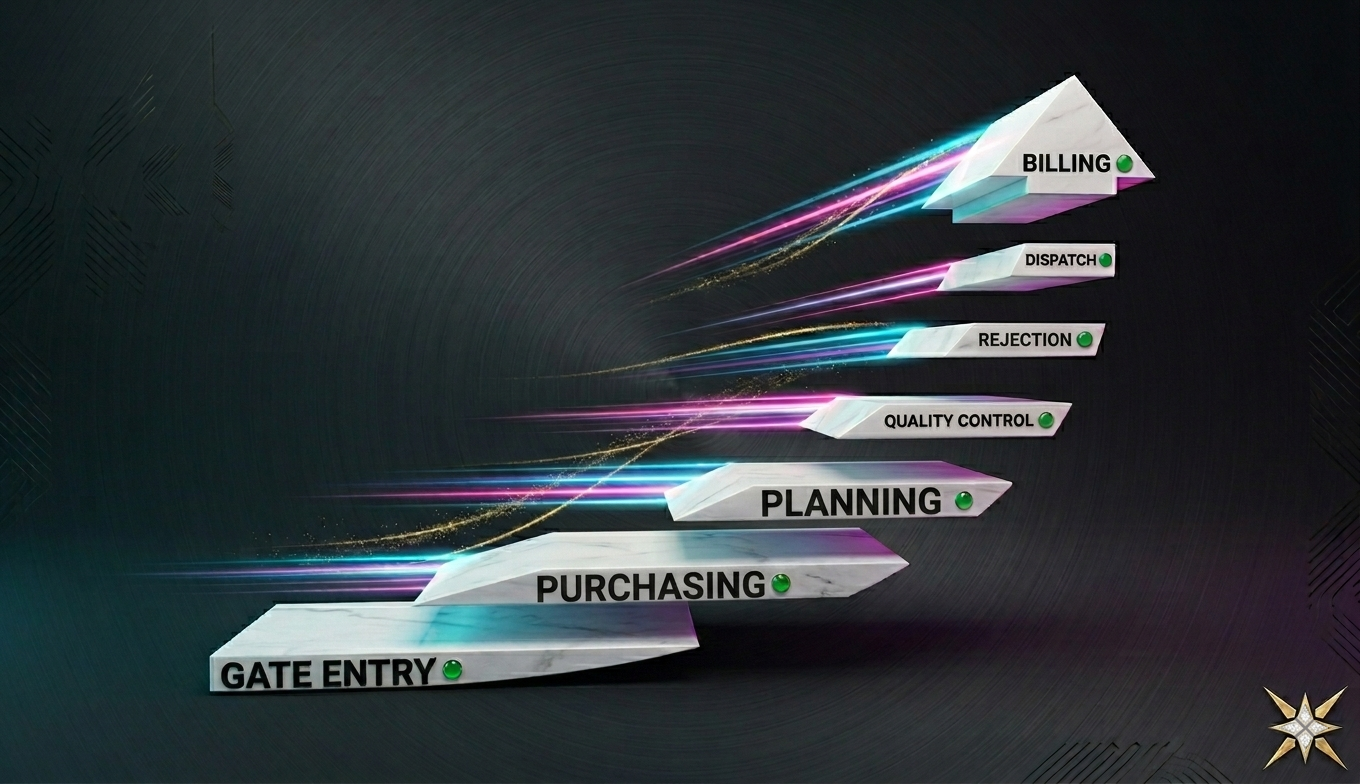
Syncrra ERP: Control Manufacturing From Gate Entry to Billing in Real Time
Discover how Syncrra unifies manufacturing execution from gate entry to billing using real-time workflows, built-in intelligence, and audit-ready traceability.
 By Prachi Bhalerao
Why Manufacturing ERP Fails at Execution and How Syncrra Fixes It
Syncrra redefines manufacturing ERP with workflow-driven execution, real-time visibility, and Agentic AI that helps teams act faster and stay in control.
 By Shekhar Gadekar
How AI-Driven ERP Is Transforming Manufacturing Operations in 2026
Discover how AI-driven ERP systems are transforming manufacturing in 2026 with real-time visibility, workflow automation, AI-generated dashboards, and Agentic AI insights.
 By Nisha Mane